
Carbon fiber conductor
High-temperature conductor with carbon core instead of steel core to increase transmission capacity
Technological developments in high-voltage power lines
The transmission capacity of conductors depends on their thermal load capacity. A conventional measure for strengthening the grid is to upgrade 40-degree cables to 80-degree cables. However, this requires masts to be raised in order to continue to ensure the necessary ground clearance in the event of greater sagging. However, due to the necessary planning and construction measures, increasing the height of the pylons incurs additional costs and requires an approval process, which can lead to delays.
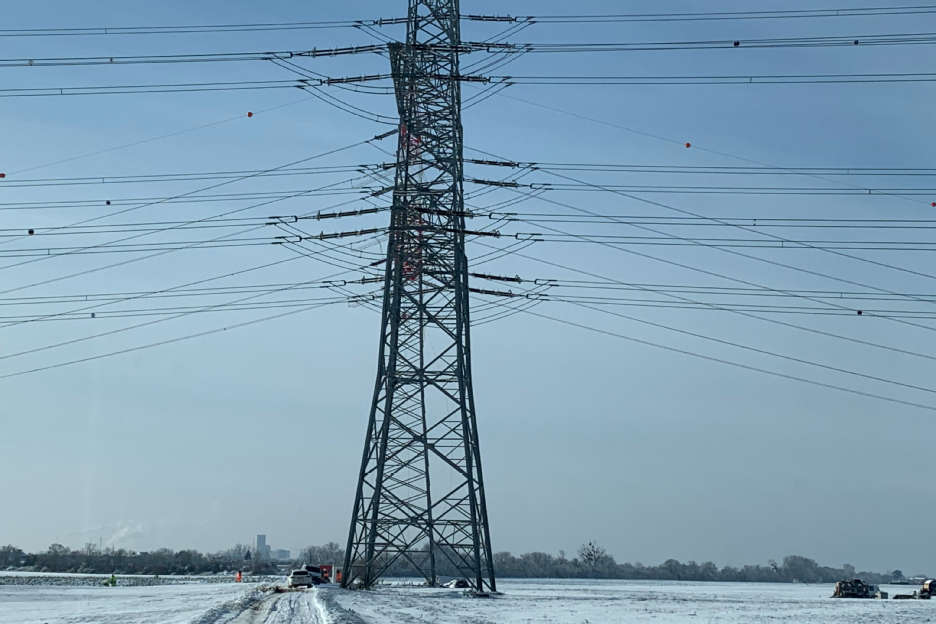
Unlike conventional conductors, carbon fiber conductors do not have a steel core, but rather a carbon fiber-reinforced composite material. This reduces sag under the same thermal load. It is therefore possible to significantly increase the transmission capacity on an existing system without raising the pylons.
However, before implementation in the APG network, a number of questions need to be clarified, particularly with regard to the mechanical properties, installation, and maintenance of carbon fiber conductors. The questions to be clarified will be answered in a multi-stage process.
The first phase of concept validation consisted of laboratory tests and was completed in 2023: The mechanical properties (tensile strength) of the conductor and the connecting elements (clamps) were tested. In contrast to conventional conductors with a steel core, the carbon fiber conductor does not show any signs of deformation before breaking, but instead breaks suddenly. However, the limit values achieved were satisfactory and very consistent for both the cable and the connecting elements.
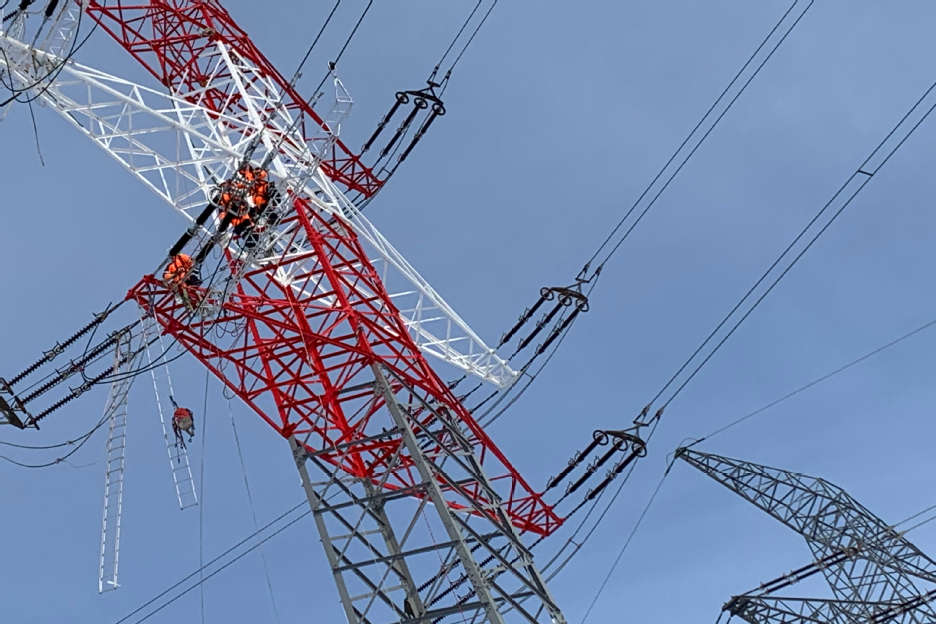
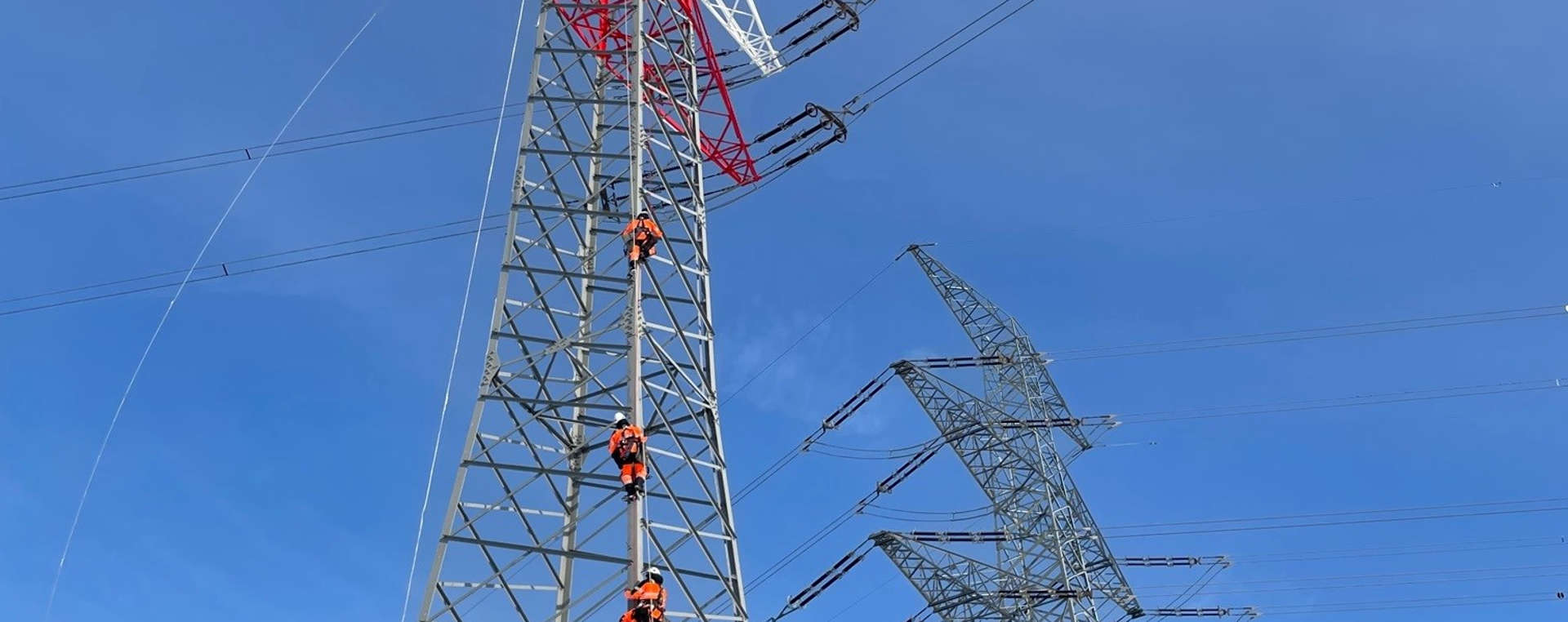
Following successful validation, the first test section with a carbon fiber conductor was implemented in 2024.