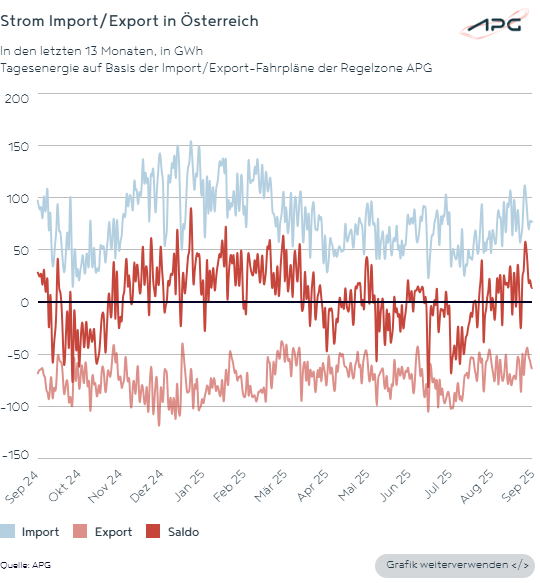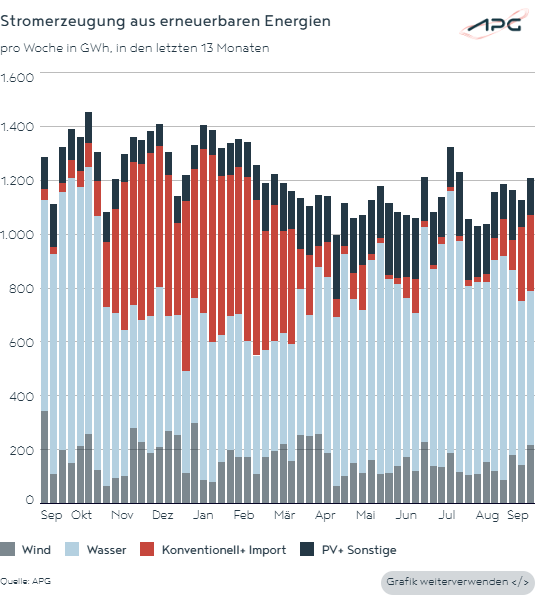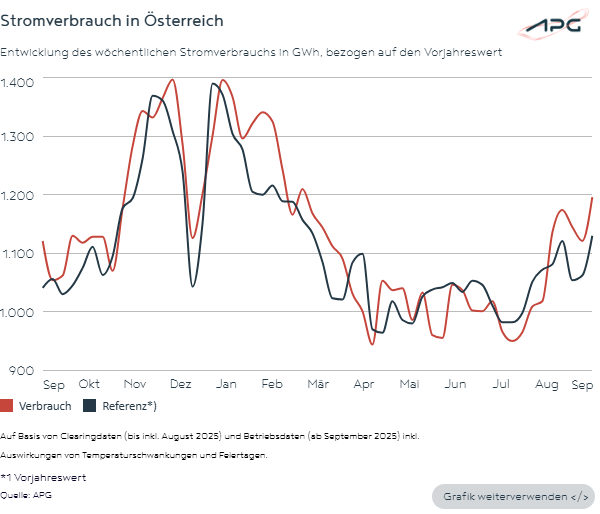

A significant drop in renewable energy output and the associated increase in electricity imports in September (calendar weeks 36-39) underscore the need for a comprehensive, system-wide approach to energy planning.
Wind power down 32 % in September
Unfavorable weather conditions in Austria led to a decline in electricity generation from wind power, photovoltaics (PV), and hydropower. Wind energy was hit particularly hard, with output falling by 32.3 % compared to September of the previous year. Overall, renewable electricity production totaled 4,026 GWh – 10.9 % less than in September 2024 (4,520 GWh).
“Our goal is to cover 100 % of Austria’s electricity demand with renewables by 2030. To achieve this, we must continue to expand storage capacity and grids so we can make full use of PV surpluses, especially in the summer months. At the same time, we will still need gas-fired power plants during periods of lower renewable production or when insufficient electricity can be imported from neighboring countries due to limited transmission capacity.
To integrate renewables as effectively as possible, we need holistic system planning that equally considers grids, storage, reserves, production, and digitalization,” says Gerhard Christiner, CTO of Austrian Power Grid (APG).
Resulting import dependency
The decline in renewable generation directly translated into increased import requirements in September. Whereas Austria exported electricity on 16 days in September 2024 - achieving an export balance of 232 GWh - the situation reversed in September 2025.
Across the entire month, Austria (APG control area*) recorded net imports of 511 GWh (based on schedules), with electricity exports occurring on only five days.
“The strong fluctuations in renewable electricity generation and repeatedly recurring import dependency clearly show the urgent need for a sufficiently dimensioned electricity grid. Integrated system planning and better coordination are essential to ensure a cost-efficient transformation of the energy system,” Christiner emphasizes.
About Austrian Power Grid (APG)
As independent transmission system operator Austrian Power Grid (APG) is in charge of ensuring the security of the electricity supply in Austria. With our high-performance and digital electricity infrastructure and the use of state-of-the-art technologies we integrate renewable energies and reduce the dependency on electricity imports, we are the platform for the electricity market, and we provide access to reasonably priced electricity and thus create the basis for Austria as supply-secure and future-oriented industrial and business location and place to live. The APG grid totals a length of about 3,500 km and is operated, maintained, and continuously adapted to the increasing challenges of the electrification of businesses, industry, and society by a team of approximately 1,000 specialists. 67 substations are distributed all over Austria and the majority is operated remotely. Thanks to our committed employees Austria had a security of supply of 99.99 percent also in 2024 and thus ranks among the top countries worldwide. Our investments of 630 million euros in 2025 (2024: 440 million euros, 2023: 490 million euros) are a motor for the Austrian economy and a crucial factor in reaching Austria’s climate and energy targets. Until 2034 APG will invest a total of approximately 9 billion euros in grid expansion and renovation projects.
Press contact

Christoph Schuh