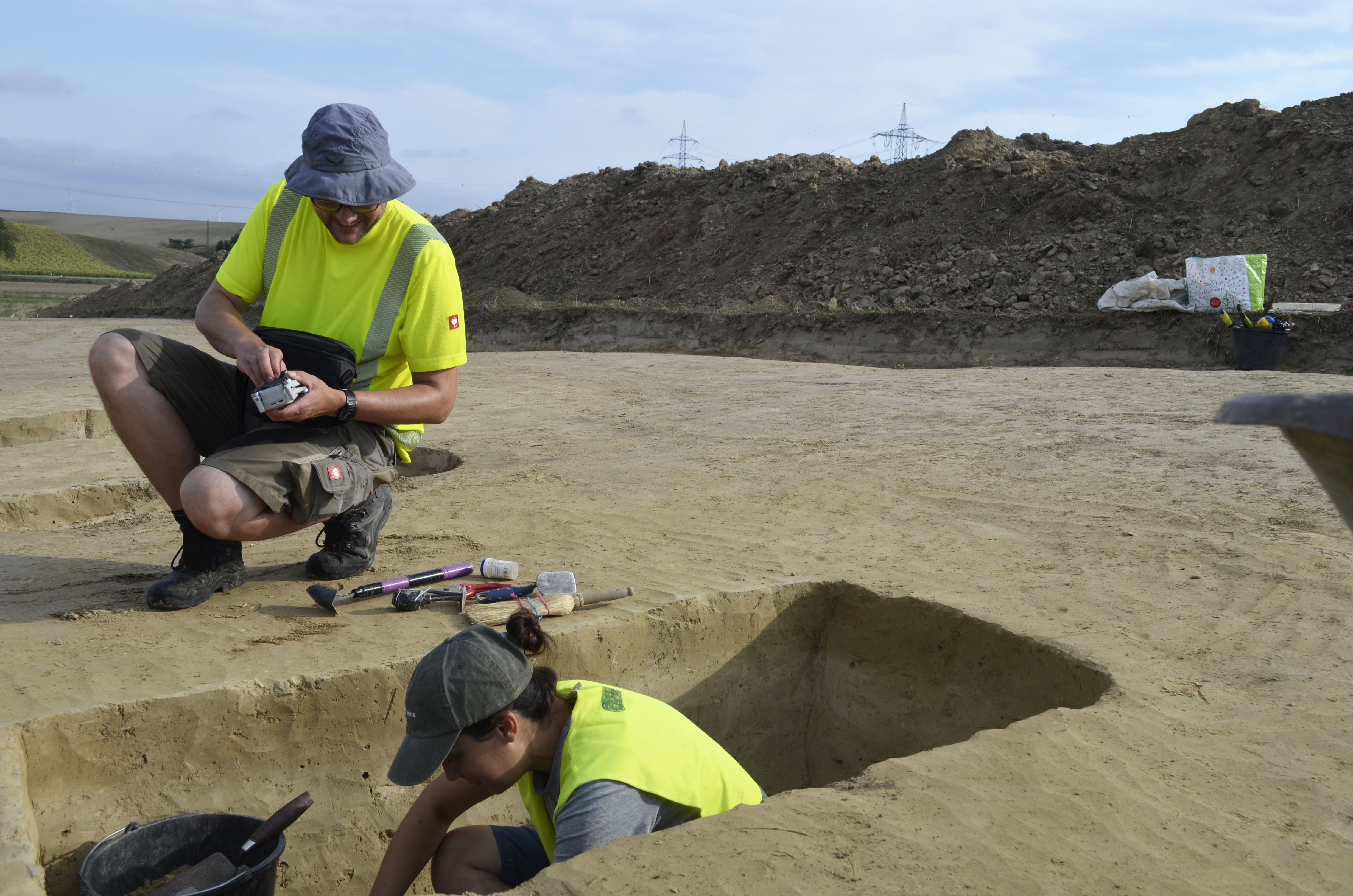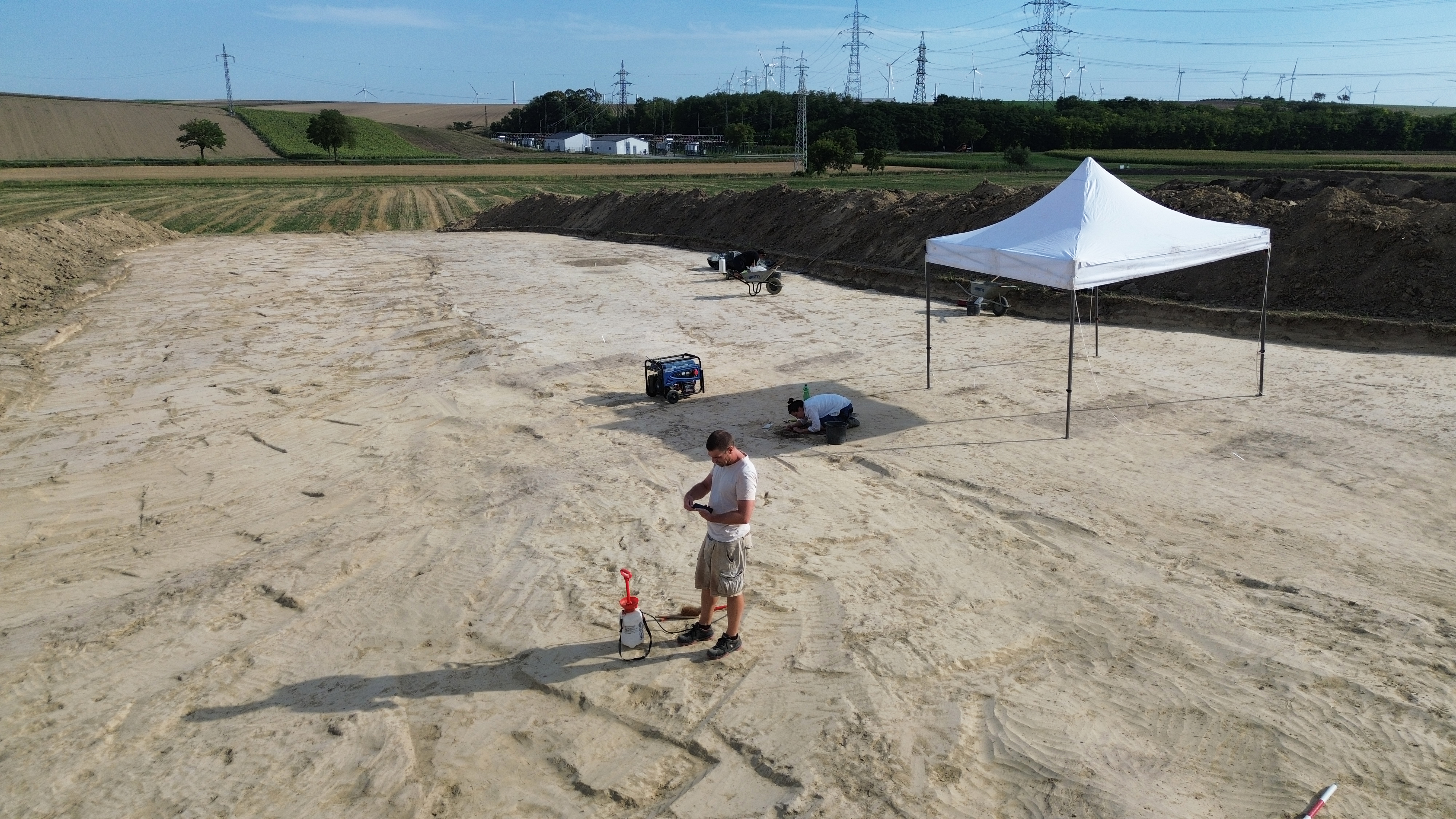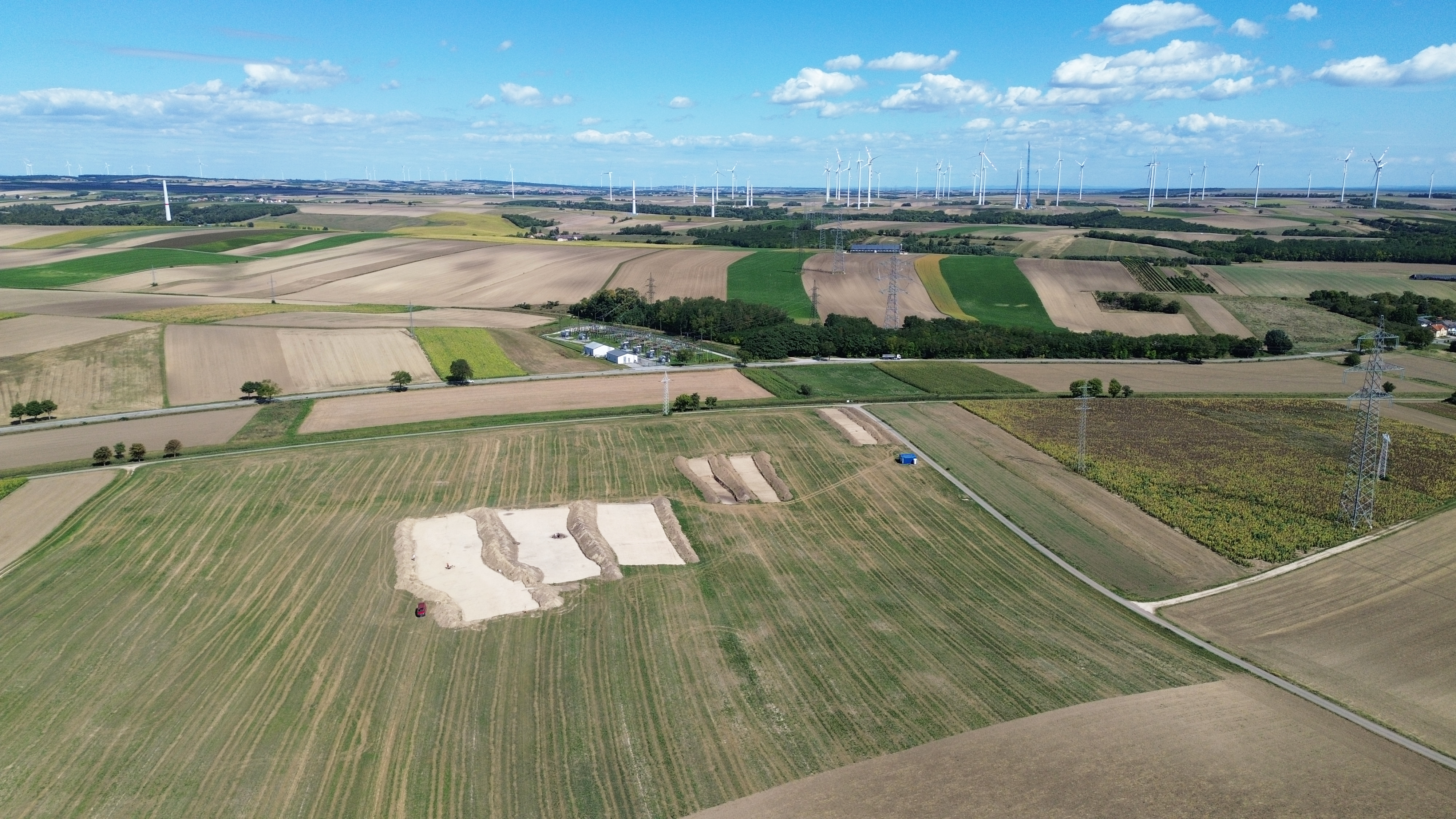

Archaeological excavations have been underway since August at the construction site of the future 380/110 kV substation in Spannberg (Lower Austria) belonging to the transmission system operator Austrian Power Grid (APG). Prior to the work, a geophysical survey had been conducted and the results suggested the presence of archaeological remains. Excavations carried out by the archaeology company Novetus have now confirmed these indications. On an area of roughly 8,000 m², researchers have uncovered traces of human activity dating from prehistory and the early Middle Ages have been found
Stone Age settlement traces & medieval graves
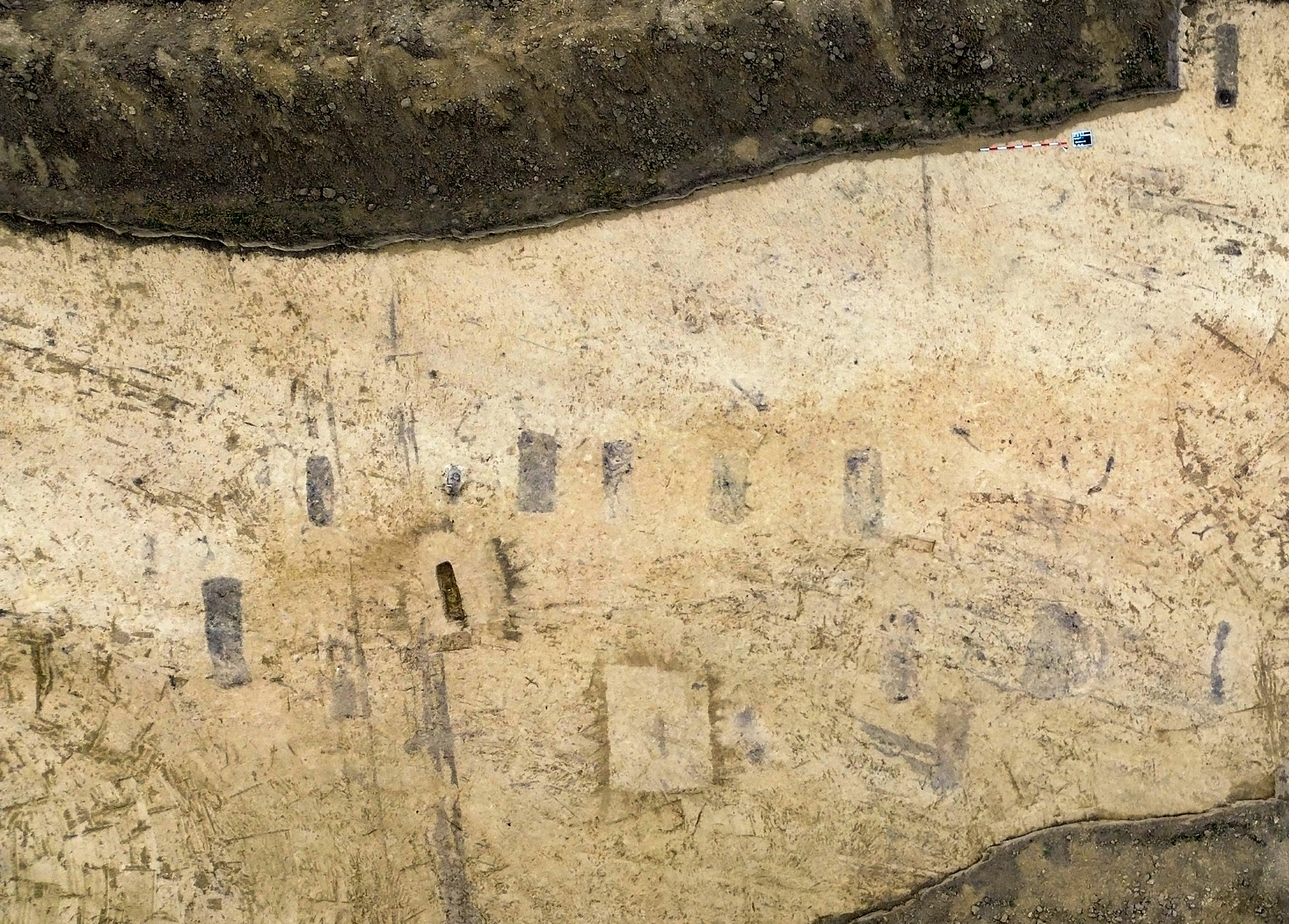
Findings from the Neolithic period (c. 4000 BC) include several truncated cone-shaped storage pits and material extraction pits, indicating that a settlement once existed near the project area. In addition, an early medieval burial ground dating from approx. 800 to 1000 AD was uncovered, consisting of two rows of simple earth graves. Finally, archeologists discovered the foundations of two buildings, though their precise dating has not yet been determined.
Anthropological findings
The early medieval burial ground comprises 20 east-west-oriented graves, all of which are simple earth burials. In some cases, individuals were interred in plain wooden coffins, though only a few traces of the wood have survived. Particularly notable is the high proportion of children and adolescents among the deceased, with all but two of the children being older than one year old. A preliminary determination of biological sex was done for seven adult individuals.
Everyday objects, ceramics, and jewelry
During guided tours on October 3, more than 200 visitors had the opportunity to view the numerous archaeological finds uncovered since August at the APG construction site. For this occasion, many of the discoveries were made accessible to the public for the first time:
Finds from the Neolithic period include ceramic fragments and a grinding stone used for processing grain into flour.
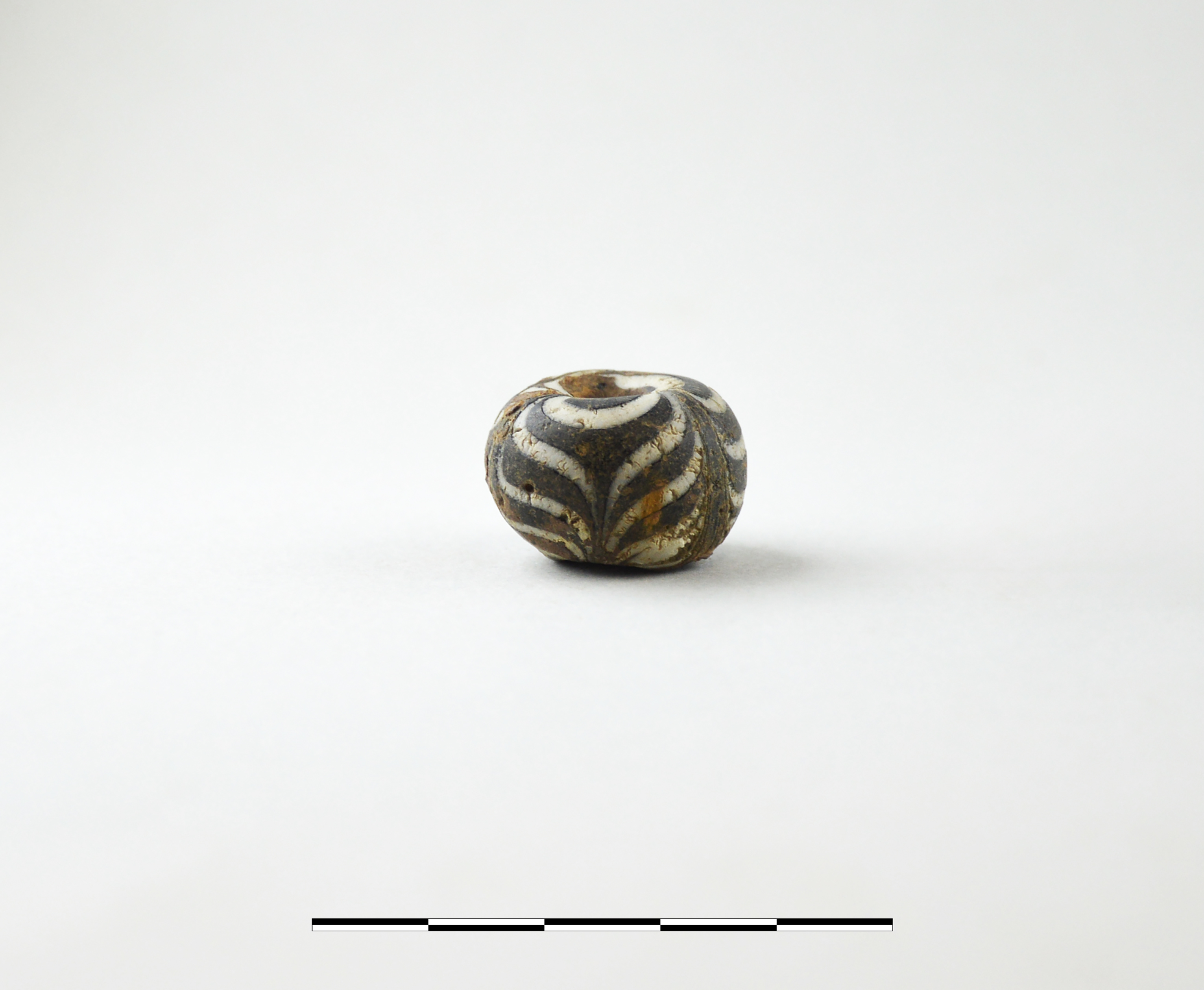
The individuals buried in the medieval cemetery were accompanied by various grave goods, including ceramic vessels, clothing accessories such as buckles, jewelry such as glass beads, and food offerings – all typical features of early medieval burials.
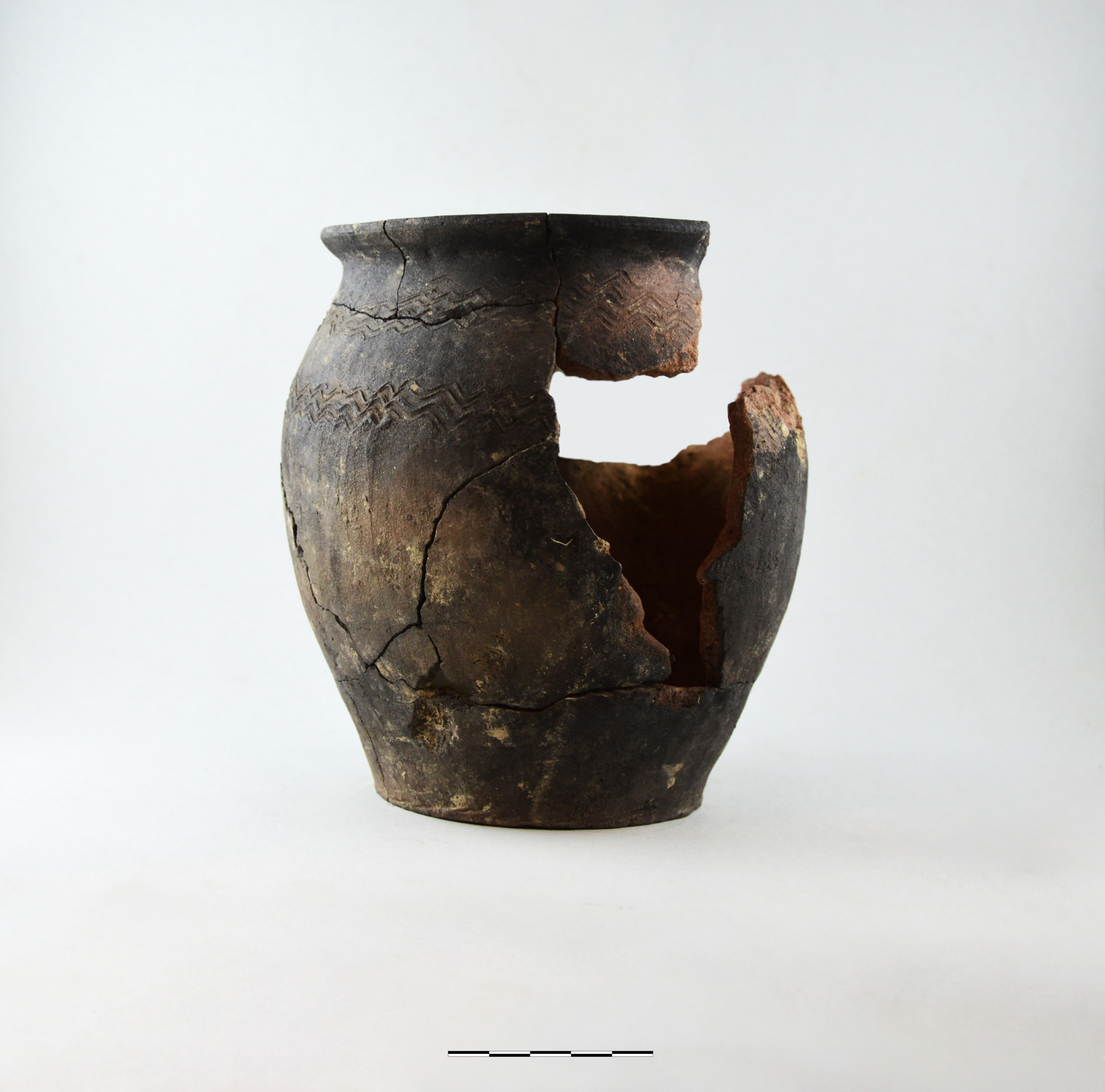
One particularly distinctive vessel, a pot decorated with wavy lines, belongs to the so-called Danube type, a ceramic style common in this region from the 8th and 9th centuries onward. Everyday objects were also placed in some of the graves: a fire steel and flints for lighting fires , an iron bracket and elongated iron fragments representing the remains of a small wooden bucket and fragments of knives found in several burials.
Start of construction for security of supply
In addition to the archaeologists, experts from APG also provided information during the event about the significance of the new Spannberg substation for the regional electricity supply and the secure, affordable energy transition in Austria. The project is part of a €9 billion investment program to strengthen the nationwide extra-high voltage grid by 2034, through the expansion and modernization of transmission lines and substations.
"With the new Spannberg substation, we are creating a direct connection between the distribution network of Netz Niederösterreich and APG's nationwide transmission grid. This will secure the region’s power supply for decades to come. In addition, surplus wind and solar power that is not consumed locally can be distributed and utilized across Austria in the future," says Christoph Guldner, who is leading the project for APG. He adds: "Preparatory construction measures such as bridge construction and the construction of an access road is set to begin in mid-October. The first parts of the substation are scheduled to go into operation at the end of 2028, with overall completion planned for mid-2029."
The careful and responsible handling of natural and cultural heritage is a standard component of all APG grid infrastructure projects. As part of this commitment, APG routinely cooperates with the Federal Monuments Office and archaeological experts – particularly in eastern Austria, where experience has shown that important historical remains are frequently discovered.
Press contact

Mara Schwarz-Mitrovic
Downloads
-

Archäolog:innen beim Freilegen der Befunde, ©Dominik Bochatz/Novetus GmbH
JPEG - 6.297 MB
-
Arbeiten bei den Ausgrabungen, ©Dominik Bochatz/Novetus GmbH
JPEG - 4.659 MB
-
Überblick über die Ausgrabungsflächen, ©Dominik Bochatz/Novetus GmbH
JPEG - 4.99 MB
-
Eine Glasperle als Grabbeigabe, ©Martina Simon/Novetus GmbH
JPEG - 1.196 MB
-
Ein restaurierter Keramiktopf aus dem 8. Jahrhundert, ©Martina Simon/Novetus GmbH
JPEG - 3.488 MB
-
Das frühmittelalterliche Gräberfeld von oben, ©Dominik Bochatz/Novetus GmbH
JPEG - 1.216 MB
-
Abb. 05: Ein restaurierter Keramiktopf aus dem 8. Jahrhundert, ©Martina Simon/Novetus GmbH
JPEG - 2.541 MB
-
Besucher:innen bestaunen die archäologischen Funde, ©Alexander Rieck
JPEG - 1.89 MB
-
Tag der offenen Ausgrabung am APG-Umspannwerk Spannberg, ©Alexander Rieck
JPEG - 2.167 MB